Bank reconciliation tips

Bank Reconciliation

Bank reconciliation tips

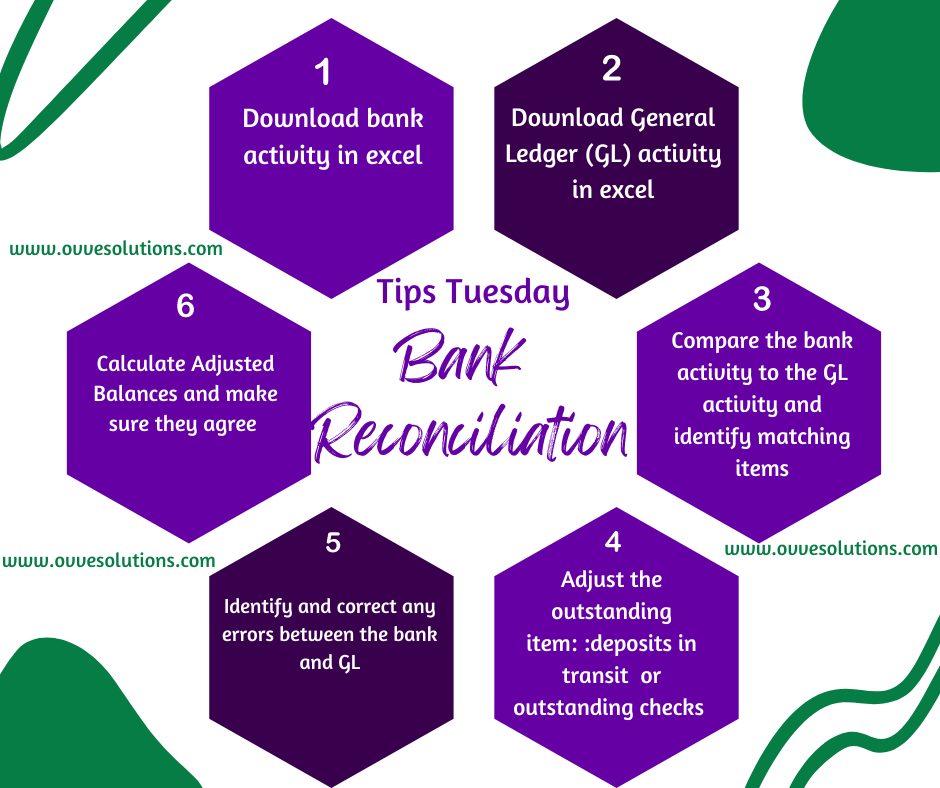
Here are the steps for performing a Bank Reconciliation.

1. Extract Data: Obtain the bank statement and cash book for the period.
2. Match Transactions: Tick off transactions that appear in both the bank statement and cash book.
3. Identify Discrepancies: Highlight transactions that do not match or are missing.
4. Adjust for Outstanding Items: Account for outstanding checks and deposits in transit.
5. Correct Errors: Adjust any errors in the cash book or bank statement.
6. Calculate Adjusted Balances: Ensure the adjusted balances in the cash book and bank statement match.
7. Document: Prepare and review the reconciliation statement.

Tips for Effective Bank Reconciliation

Regular Reconciliation: Perform bank reconciliations regularly, ideally monthly, to maintain accurate records.
Automation: Use accounting software to automate data entry and reconciliation where possible.
Detailed Records: Maintain detailed records of all transactions, including receipts and payments.
Clear Policies: Establish clear policies and procedures for recording transactions and conducting reconciliations.
Training: Ensure staff involved in the reconciliation process are well-trained and understand the importance of accuracy.
Steps to reconcile account receivable

Accounts Receivable Reconciliation

Steps to reconcile account receivable

Step-by-Step Guide to Accounts Receivable Reconciliation


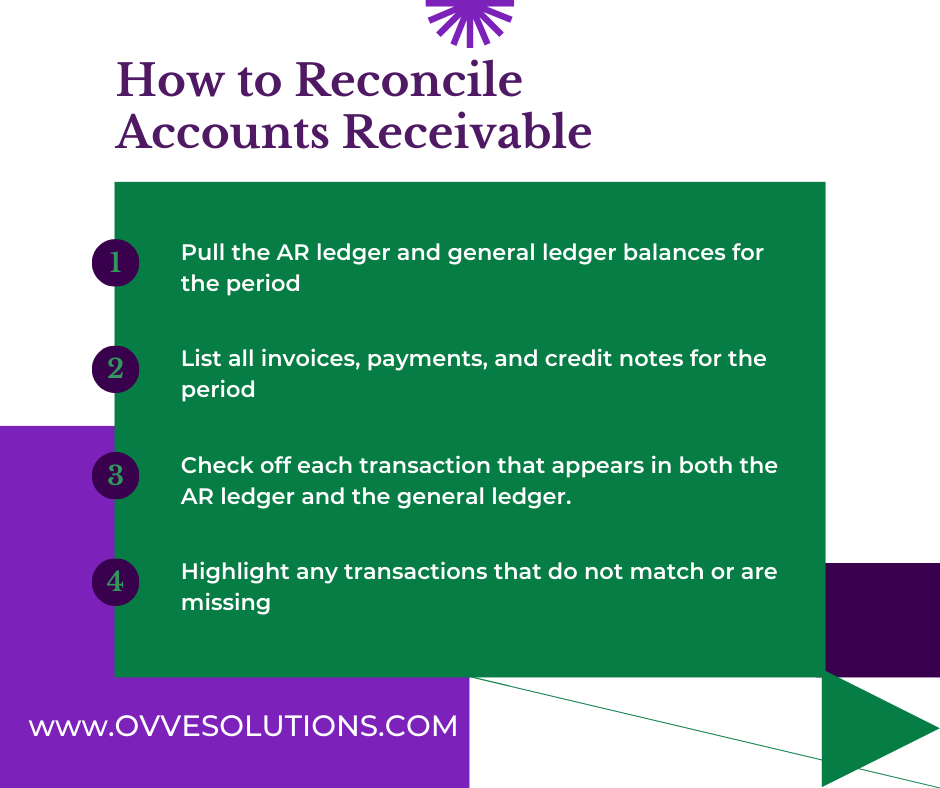
1. Gather Necessary Documents

Accounts Receivable Ledger: This is a detailed record of all transactions involving customer invoices and payments.
General Ledger: This includes a summary of all financial transactions, including those related to accounts receivable.
Customer Invoices: Detailed records of amounts billed to customers.
Payment Records: Records of payments received from customers.
Credit Notes: Records of any credit adjustments given to customers.

2. Prepare for Reconciliation

Period Selection: Determine the period you are reconciling (e.g., monthly).
Reconciliation Template: Use a reconciliation template or software to help organize the data.

3. Compare Balances

Opening Balances: Verify that the opening balances for accounts receivable in the ledger match the opening balances in the general ledger.
Ending Balances: Ensure the ending balances in both the accounts receivable ledger and the general ledger match.

How to find missing transactions

Finding missing transactions in your financial records can be a meticulous process, but it’s essential for accurate bookkeeping and financial management.
Here’s a step-by-step guide to help you locate and resolve missing transactions:


1. Gather All Financial Records

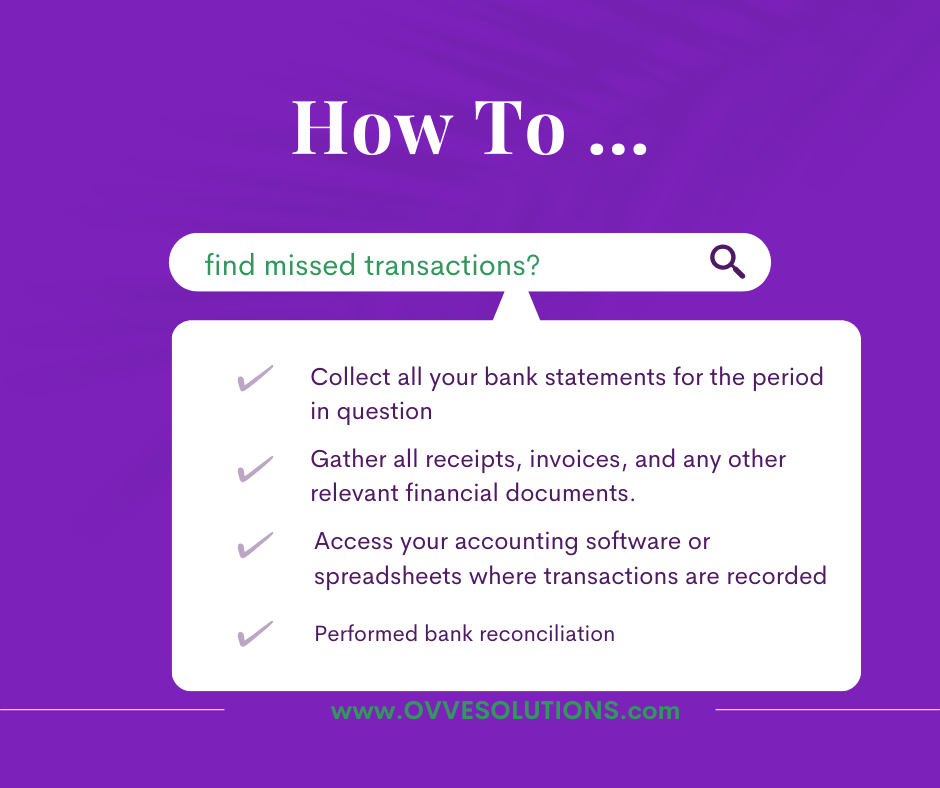
Bank Statements: Collect all your bank statements for the period in question.

Receipts and Invoices: Gather all receipts, invoices, and any other relevant financial documents.

Accounting Software Records: Access your accounting software or spreadsheets where transactions are recorded.

2. Reconcile Your Accounts

Bank Reconciliation: Compare your bank statements to your accounting records.

Cash Flow Management

Effective cash flow management is crucial for the financial health and sustainability of any business.

Here are five tips to help manage cash flow effectively:
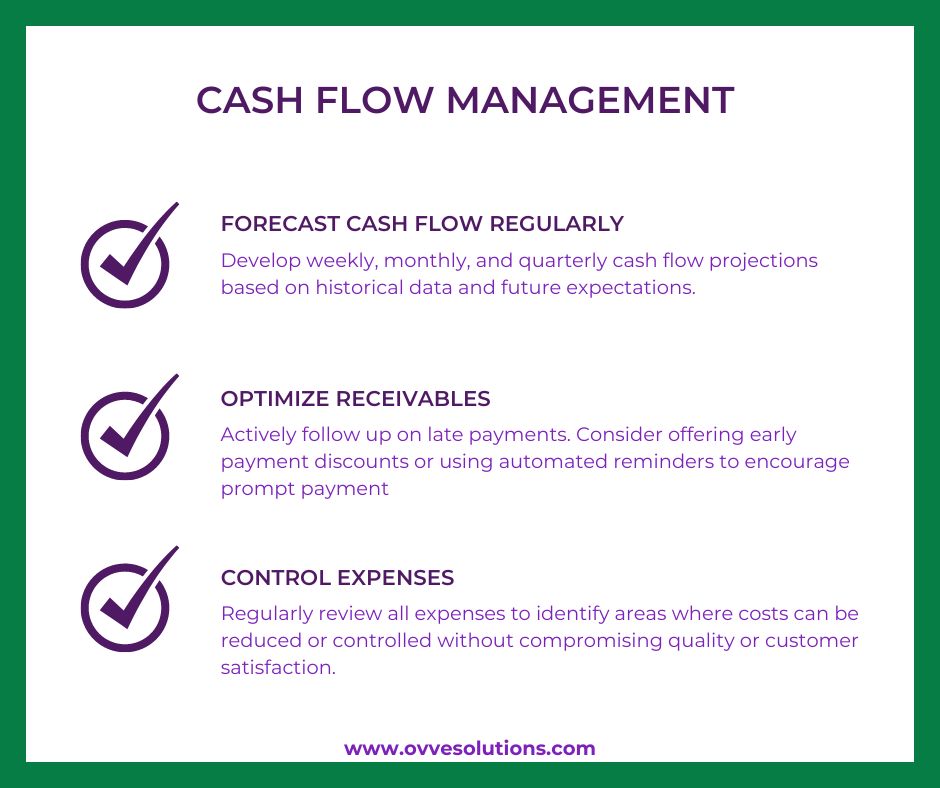
1. Forecast Cash Flow Regularly
• Create Projections: Develop weekly, monthly, and quarterly cash flow projections based on historical data and future expectations. This helps anticipate periods of high and low cash flow and plan accordingly.
2. Optimize Receivables
• Invoice Promptly: Send invoices immediately after services have been performed to reduce the time it takes to receive payment.
• Implement Clear Payment Terms: Clearly define payment terms (e.g., Net 30) on invoices to set expectations with clients.
• Follow Up on Overdue Invoices: Actively follow up on late payments. Consider offering early payment discounts or using automated reminders to encourage prompt payment.
3. Manage Payables Strategically
• Negotiate Payment Terms: Negotiate longer payment terms with suppliers to keep cash in your business longer.
• Prioritize Payments: Prioritize payments based on due dates and the importance of the relationship with each supplier. Pay critical suppliers first to avoid disruptions in business operations.
• Take Advantage of Discounts: If your cash flow allows, take advantage of early payment discounts offered by suppliers.
4. Control Expenses
• Monitor Expenses Closely: Regularly review all expenses to identify areas where costs can be reduced or controlled without compromising quality or customer satisfaction.
• Implement a Budget: See Ovve Solutions prior posts.
• Cut Unnecessary Costs: Identify and eliminate unnecessary expenses. This might include renegotiating contracts, finding cheaper suppliers, or reducing discretionary spending.
5. Maintain a Cash Reserve
• Build an Emergency Fund: Maintain a cash reserve to cover unexpected expenses or periods of reduced income. This can help avoid taking on high-interest debt during financial shortfalls.
• Save Regularly: Set aside a portion of profits each month to build up your cash reserve gradually.
Additional Tips
• Use Financing Wisely: Consider short-term financing options, such as lines of credit, to bridge temporary cash flow gaps. Use financing strategically and avoid over-reliance on debt.
• Review Pricing Strategies: Regularly review your pricing strategies to ensure you are charging appropriately for your products or services, and adjust prices as needed to reflect market conditions and cost changes.