Set up a Budget

Setting up a budget is essential for financial stability and growth.
Steps to Set Up a Budget:

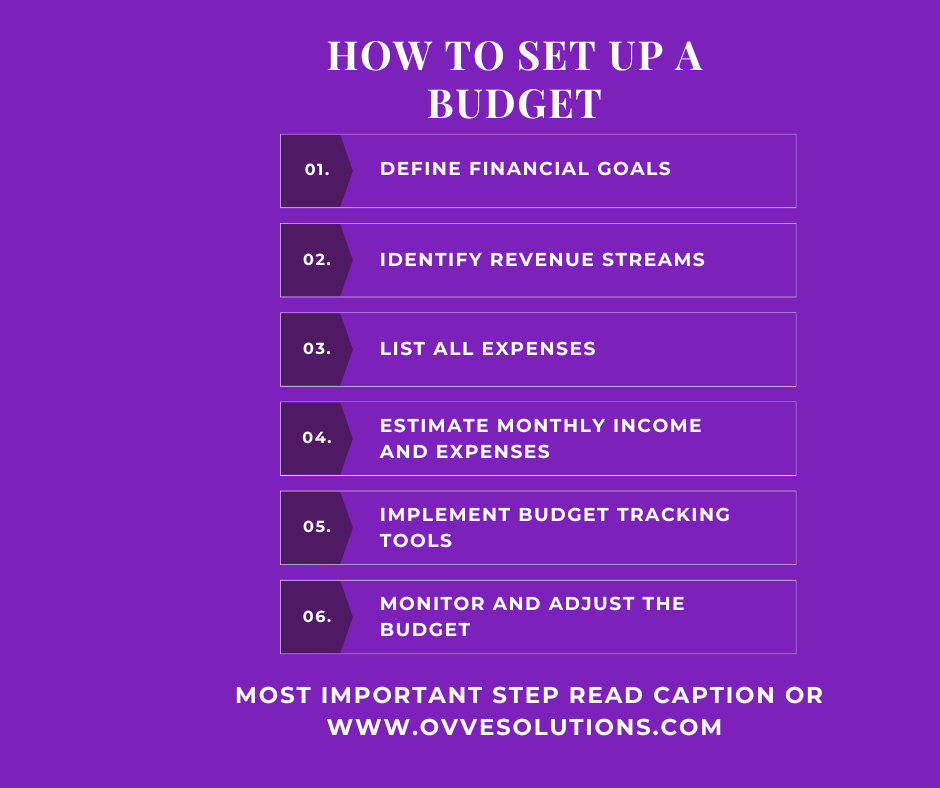
1. Define Financial Goals

• Short-Term Goals: Monthly and quarterly targets for revenue, expenses, and profit.
• Long-Term Goals: Annual financial targets, expansion plans, and savings goals.

2. Identify Revenue Streams

• Client Fees: Income from therapy sessions, consultations, and group sessions.
• Insurance Reimbursements: Payments received from insurance companies.
• Grants and Funding: Any grants or external funding received.
• Workshops and Seminars: Revenue from conducting workshops, seminars, or training programs.


3. List All Expenses

• Fixed Costs:
• Rent/Mortgage: Monthly rent or mortgage payments for the practice space.
• Salaries and Wages: Payments to therapists, administrative staff, and other employees.
• Utilities: Electricity, water, internet, and phone services.
• Insurance: Professional liability insurance, property insurance, and health insurance for employees.
• Variable Costs:
• Office Supplies: Stationery, therapy materials, and other office supplies.
• Marketing and Advertising: Costs associated with promoting the practice.
• Professional Development: Training, workshops, and conferences for staff.
• Technology: Software subscriptions, electronic health records (EHR) systems, and hardware maintenance.
• Miscellaneous: Any other expenses that may arise unexpectedly.


4. Estimate Monthly Income and Expenses

• Revenue Projections: Based on historical data and expected client volume
• Expense Projections: Based on past expenses and any anticipated changes.


5. Implement Budget Tracking Tools

• Accounting Software: Use accounting software to automate tracking of income and expenses.

OVVE SOLUTIONS has the tool for you when you sign up for monthly services.

6. Monitor and Adjust the Budget

• Analyze Variances: Identify any significant differences between the budgeted and actual figures.
• Adjust Projections: Modify the budget based on changes in revenue or unexpected expenses.
• Financial Reports: Generate monthly financial reports to keep track of the practice’s financial health.

7. Plan for Contingencies – most important step

• Emergency Fund: Set aside funds for unexpected expenses or revenue shortfalls.
• Cost-Cutting Measures: Identify areas where costs can be reduced if necessary.
Petty Cash Reconciliation

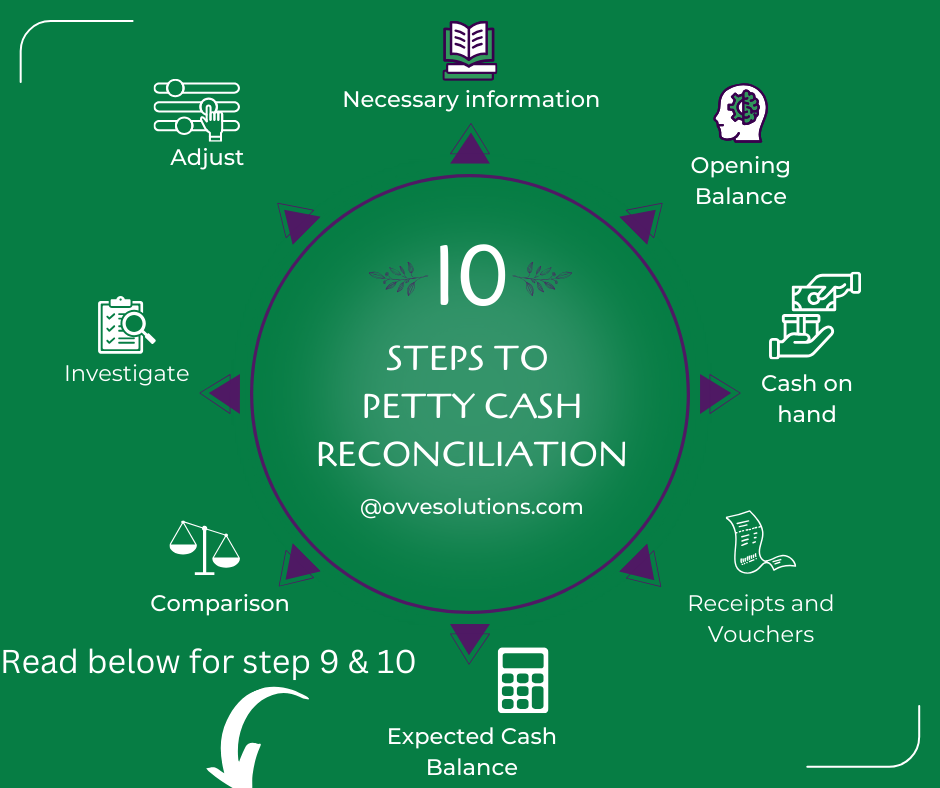
Here is the Step-by-Step Guide to Petty Cash Reconciliation

1. Gather Necessary Materials
– Petty Cash Log: The record of all petty cash transactions.
– Petty Cash Vouchers: Receipts and vouchers for each expenditure.
– Cash on Hand: The physical cash remaining in the petty cash box.

2. Verify the Opening Balance
– Confirm that the opening balance for the petty cash fund is accurate according to the previous reconciliation.

3. Count Cash on Hand
– Physically count the cash remaining in the petty cash box.

4. Summarize Receipts and Vouchers
– Collect all receipts and vouchers for petty cash expenditures since the last reconciliation.
– List and total all expenses documented by these receipts and vouchers.

5. Calculate Expected Cash Balance
– Formula: Starting Balance – Total Expenses = Expected Cash Balance.
– Ensure the starting balance matches the last reconciled petty cash balance.

6. Compare Cash on Hand to Expected Balance
– Check if the physical cash on hand matches the expected cash balance calculated.

7. Identify and Investigate Discrepancies
– Discrepancies: Note any differences between the expected balance and the actual cash on hand.
– Investigation: Investigate any discrepancies by reviewing receipts, vouchers, and the petty cash log.

8. Adjust the Records
– Correct Errors: Make necessary adjustments to the petty cash log for any errors found.
– Update Log: Ensure all transactions are recorded accurately in the petty cash log.

9. Replenish Petty Cash
– If the petty cash is running low, prepare a request to replenish the fund to its original balance.
– Record the replenishment in the petty cash log.

10. Document the Reconciliation
– Reconciliation Statement: Prepare a reconciliation statement that includes the starting balance, total expenses, actual cash on hand, and any discrepancies.
– Approval: Have the reconciliation reviewed and approved by a supervisor or manager.

Tips for Effective Petty Cash Management

Regular Reconciliation: Perform petty cash reconciliation regularly, such as weekly or monthly, depending on the usage.
Secure Storage: Keep petty cash in a secure, locked location.
Detailed Records: Maintain detailed records of all transactions, including dated receipts and vouchers.
Clear Policies: Establish and communicate clear policies for petty cash usage and documentation.
Training: Ensure employees handling petty cash are trained in proper procedures and documentation.

Bank reconciliation tips

Bank Reconciliation

Bank reconciliation tips

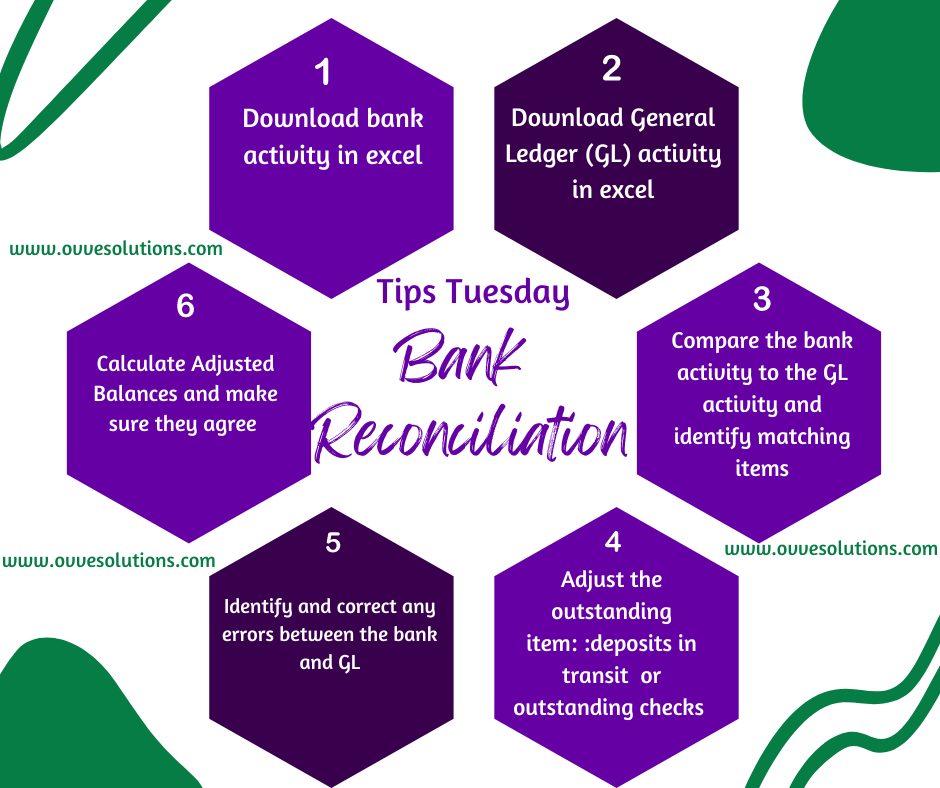
Here are the steps for performing a Bank Reconciliation.

1. Extract Data: Obtain the bank statement and cash book for the period.
2. Match Transactions: Tick off transactions that appear in both the bank statement and cash book.
3. Identify Discrepancies: Highlight transactions that do not match or are missing.
4. Adjust for Outstanding Items: Account for outstanding checks and deposits in transit.
5. Correct Errors: Adjust any errors in the cash book or bank statement.
6. Calculate Adjusted Balances: Ensure the adjusted balances in the cash book and bank statement match.
7. Document: Prepare and review the reconciliation statement.

Tips for Effective Bank Reconciliation

Regular Reconciliation: Perform bank reconciliations regularly, ideally monthly, to maintain accurate records.
Automation: Use accounting software to automate data entry and reconciliation where possible.
Detailed Records: Maintain detailed records of all transactions, including receipts and payments.
Clear Policies: Establish clear policies and procedures for recording transactions and conducting reconciliations.
Training: Ensure staff involved in the reconciliation process are well-trained and understand the importance of accuracy.

How to find missing transactions

Finding missing transactions in your financial records can be a meticulous process, but it’s essential for accurate bookkeeping and financial management.
Here’s a step-by-step guide to help you locate and resolve missing transactions:


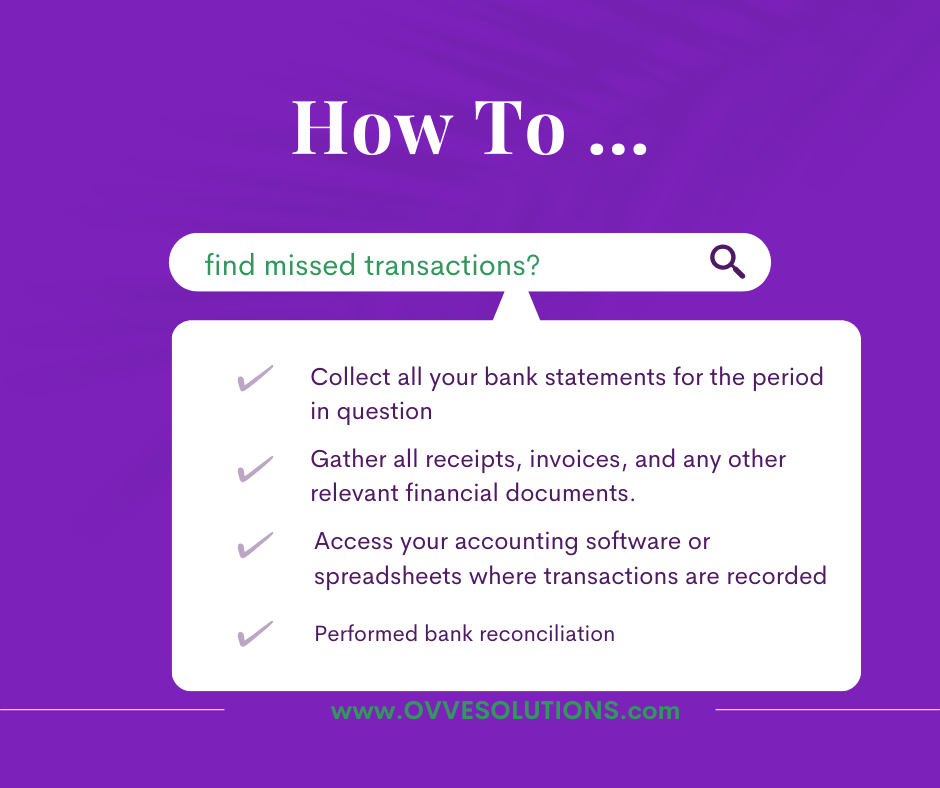
1. Gather All Financial Records

Bank Statements: Collect all your bank statements for the period in question.

Receipts and Invoices: Gather all receipts, invoices, and any other relevant financial documents.

Accounting Software Records: Access your accounting software or spreadsheets where transactions are recorded.

2. Reconcile Your Accounts

Bank Reconciliation: Compare your bank statements to your accounting records.